
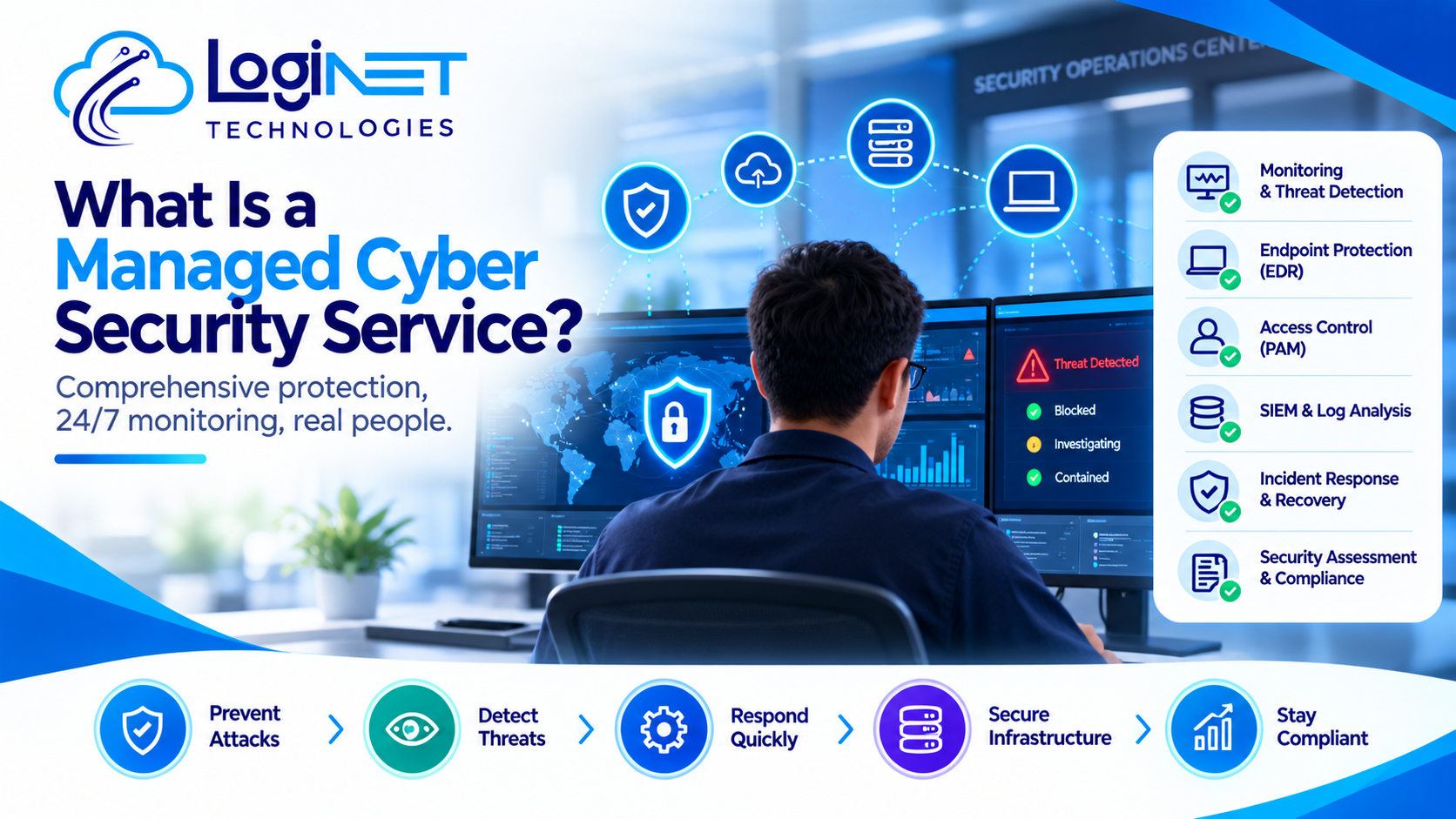
What Is a Managed Cyber Security Service, and What Should Be Included?
Picture a login alert going off at 2am on a Saturday. The only person who’d normally catch it is asleep, because nobody’s actual job is to be watching at that hour. What is a managed cyber security services? It’s the fix for exactly that gap. Someone outside your business is watching the systems, stepping in when something looks wrong, and handling the unglamorous upkeep nobody on staff has the hours for. Think of it as a security team you rent rather than hire.
What follows is what should genuinely be in one of these arrangements, what’s just padding dressed up nicely, and a handful of slightly awkward questions worth asking any provider before signing anything.
Why outside help, specifically
Most mid-sized businesses don’t run a security team, not really. There’s an IT manager, maybe a helper or two, and a queue that’s mostly password resets, laptop setups, and a printer that’s decided not to work again. Security gets whatever hours are left over, and in a genuinely busy week that’s often none at all. Attackers, unhelpfully, don’t care about your roster.
Hiring around this doesn’t solve it either. People who actually know security well are hard to find, expensive once found, and tend to get poached the moment they’re properly trained. Buying it in as a service is usually faster. And if a managed IT provider’s already handling the rest of your infrastructure, folding security into that same arrangement tends to be the path of least resistance.
So what does the provider actually own?
Here’s the practical version: somebody other than you is responsible for watching your systems, catching anything suspicious, containing it, and explaining afterwards what happened and why. That scope sits in writing, not in someone’s head. So does the split of who does what between your team and theirs, and who you actually call when things go sideways at an inconvenient hour.
Somebody has to be watching, full stop
Everything else is built upon this basis. Endpoints, servers, cloud logins, email, analysts should have eyes on all of it daily, including the days your own team hasn’t thought about security once. Most providers package this as Managed Detection and Response, MDR, and the word doing the real work there is “response.” Plenty of vendors will happily send you an alert. Fewer will actually investigate it, decide whether it’s genuinely a problem, and cut the affected machine off the network before it spreads anywhere else. Worth asking directly who does that investigating part, because if the honest answer turns out to be “you,” then a 2am alert is really just homework with extra steps. For businesses needing coverage round the clock, that’s where a managed SOC earns its keep.
The network bit nobody revisits
Firewalls tend to get configured in a rush during an office move, and then nobody opens those rules again for years afterward. Contractors keep remote access long past when the contract actually ended. Somewhere there’s a switch sitting in a cupboard that hasn’t seen an update since before half the current staff started. Under a proper managed arrangement, network security means someone’s actually going through all of it, patching what needs patching, and flagging traffic that doesn’t look like it belongs to your business. It’s worth checking early whether this sits inside the base fee or gets billed as an extra, because providers differ a lot here.
Finding the holes before someone else does
Most attackers aren’t being especially clever. Open doors tend to do the work for them, a server that quietly missed a patch months back, a setting left on whatever the default happened to be. A regular vulnerability assessment is what turns those up, and a decent provider ranks the results rather than handing over a 400-line spreadsheet that gets filed and ignored forever. You want the short version: this one’s exposed to the internet, that one’s actively being exploited right now, start there. If nobody’s ever properly looked, running a security assessment before you even sign anything gives both sides the same honest starting point.
Working out who does what before the bad day arrives
Figuring out who makes the call mid-incident is a miserable, slow way to do it, which is exactly why the plan gets written beforehand instead. Who calls whom, who’s authorised to pull a server offline, who talks to customers, and when someone outside the business legally needs to be told, all of that needs answers well before the actual day. If you’re holding personal information, the Notifiable Data Breaches scheme under the Privacy Act may well apply depending on your size, so the plan needs room for that too. This is incident response planning, and rehearsing it matters almost as much as writing it down. Even a short tabletop exercise, everyone sitting around working through a pretend breach, surfaces gaps that rereading a PDF never will. Worth asking whether one’s actually included.
Where the Essential Eight comes into it
Sooner or later the Essential Eight comes up, a set of mitigation strategies from the Australian Signals Directorate that’s become something of a common yardstick across Australia. A decent provider lines its work up against those controls honestly, and tells you plainly where it falls short, rather than letting you quietly assume everything’s covered when it isn’t. Cyber security compliance in Australia isn’t one single thing either. A medical practice and a lender aren’t facing the same expectations, and a government supplier faces a different set again. Get the provider actually talking about your sector specifically, not reciting a generic pitch they’ve used fifty times already.
Reports that are actually worth opening
Reports exist for whoever has to make a decision off the back of them. What was found, what got done about it, what’s still sitting open, what needs your sign-off. Pages of graphs with no actual conclusion attached don’t help anyone, and you’re entitled to ask for something more useful than that.
Signs an offer’s thinner than it looks
A few tells worth watching for. “We monitor everything” sounds reassuring until you ask which everything, specifically, and what’s quietly left out. No clear answer about weekends is another one, ask directly who’s actually picking up the phone at 3am on a Sunday and how you’d reach them. Software with nothing else behind it is a third, tools don’t investigate anything, people do. And a long contract with no review checkpoint built in is worth questioning too, since your business will look fairly different in two years’ time.
How to actually choose between them
Before talking to anyone, jot down the systems your business genuinely can’t run without. Add where your most sensitive data actually lives and who can get at it. Then make each provider walk you through covering those specific things, not their standard slide deck. Honestly, a lot of managed cyber security services look nearly identical on a features page, and the real difference only shows up once they’re forced to get specific about your actual environment rather than a generic one. Be a bit wary of anyone who opens the conversation with a product name before asking a single question about your business. And keep someone on your side involved throughout, they don’t need to be a security specialist, just someone who understands how your systems actually fit together and can make a fast call when needed.
A Few Questions Worth Asking
How’s this different from just buying security software?
Software’s a tool, and somebody still has to be the one running it. With a managed service, that somebody is the provider’s team, reading the alerts, investigating, acting, and reporting back afterwards. You notice the difference most clearly at 3am, when something odd happens and an actual person deals with it rather than it sitting unread in an inbox.
Do smaller businesses genuinely need this?
Size matters less than what you’d stand to lose. Customer records, cloud-based systems, a business that can’t trade for even a few days without IT working properly, if any of that sounds like you, you’re exposed whether there’s ten staff or two hundred. The service itself just needs to be sized to actually match.
Do we still need our own internal IT team?
Mostly, yes. Your people know the systems, the staff, and the odd historical workaround nobody’s bothered documenting, while the provider brings the monitoring and response skills you’d otherwise have to go hire for separately. It works well when it’s obvious who’s handling what, so nothing quietly falls between the two.
Where to go from here
A managed service is worth the money when responsibilities are actually named, somebody’s genuinely watching, and the reports make sense to you without a glossary. If a proposal can’t demonstrate that clearly, it’s worth looking elsewhere.
If you’d like to talk through what your current setup does and doesn’t cover, get in touch with the Pansoft team. No pressure either way, we’re happy to go through it with you, and you’re welcome to read more about our cyber security work first if that’s useful. One for the comments while you’re here: which of these areas has been hardest to get a straight answer on from your current provider?

Related Posts

Cyber Security for Small Business in Queensland: Where to Start First
Cyber Security for Small Business in Queensland: Where to Start First Start with an assessment, not a shopping list. Before you commit to any cyber…
Read More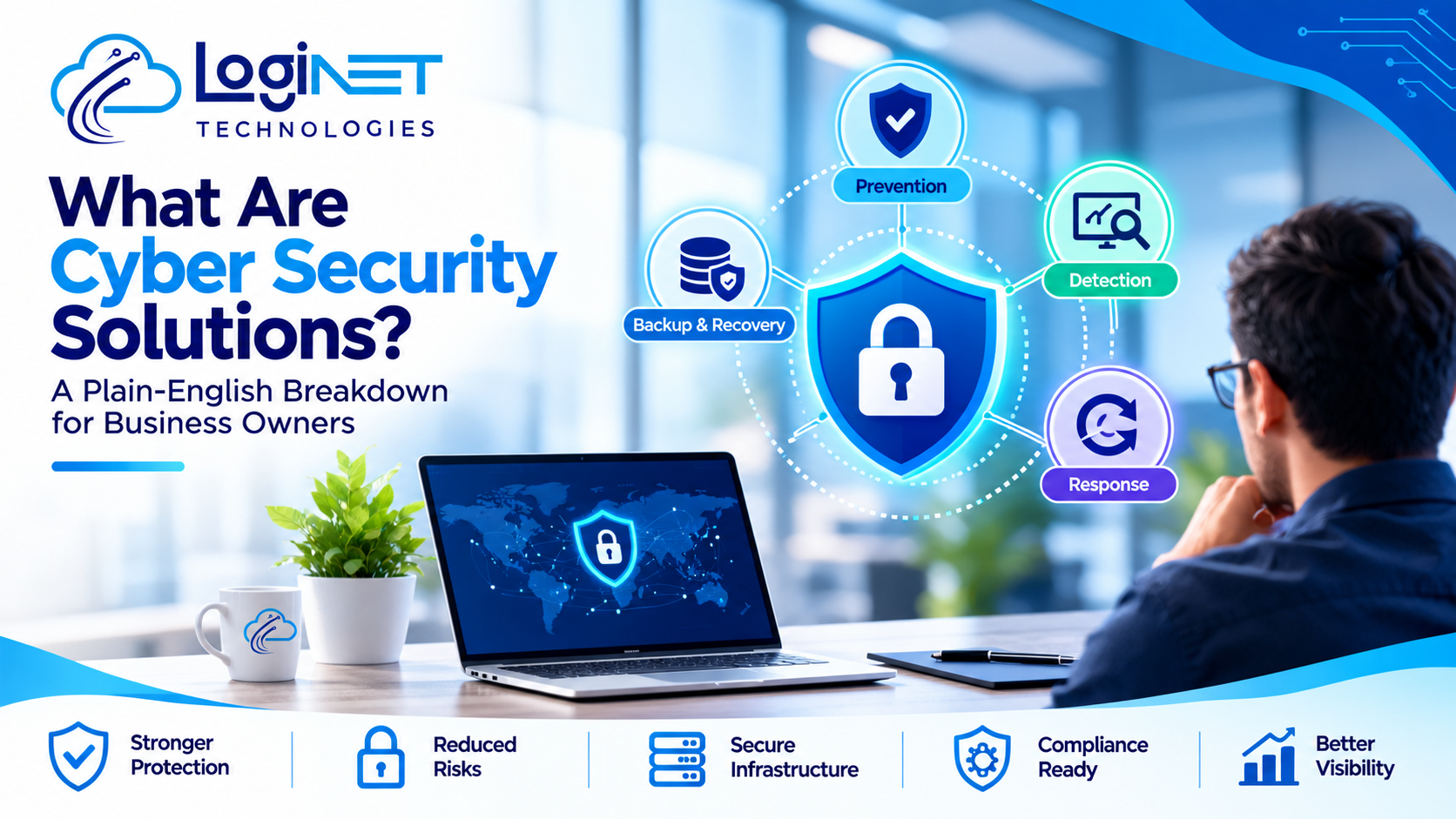
What Are Cyber Security Solutions? A Plain-English Breakdown for Business Owners
What Are Cyber Security Solutions? A Plain-English Breakdown for Business Owners Cyber security solutions are everything a business puts in place to keep attackers out,…
Read More