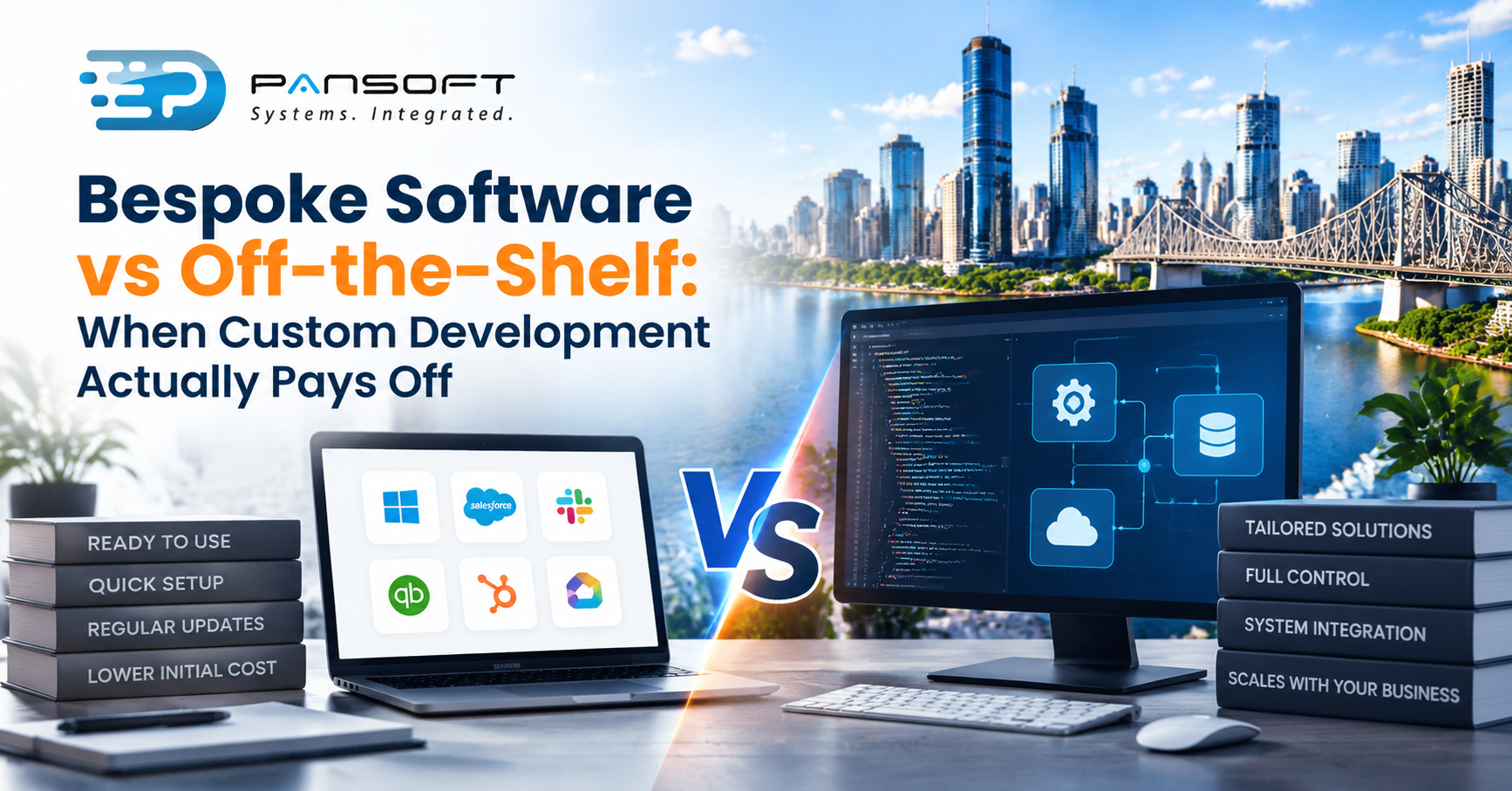
Bespoke Software vs Off-the-Shelf: When Custom Development Actually Pays Off
By the Pansoft Technologies team | Published 20 October 2026 | Last reviewed: October 2026
Bespoke software development services pay off when your process is what sets you apart, when a product needs heavy bending to fit, or when your systems must talk to each other. If a product covers most of what you need, buy it and configure it.
This is for owners and IT managers deciding between a product and a build, who want a test they can run before anyone sends a quote.
When does custom software actually pay off?
When the thing you’re automating is central to how you win work, or when no product fits without major changes. For common needs such as email, payroll or basic bookkeeping, buying is almost always the saner choice.
The NSW Government’s buy, build or borrow guidance and the UK Government Digital Service’s blog on the same question land on similar tests. Here they are in plain terms:
- Is it core to what you do? Build what sets you apart. Buy what everyone needs.
- Is the market mature? Plenty of vendors usually means someone has solved it already.
- Do you have the skills to run it afterwards? A build isn’t finished at launch.
- How much would the product need to bend? Heavy customisation is a warning sign in its own right.
- What does it cost over years, not months? Upkeep, upgrades and the opportunity cost of your own people’s time all count.
Most needs are more common than they feel. The GDS author warns that teams often underestimate how ordinary their requirements are and build something unnecessarily. Be suspicious of “we’re different” until you’ve listed the steps that really are.
How do the two routes compare?
Off-the-shelf wins on speed and shared upkeep. Custom wins on fit and control. Neither is cheaper in every case, because the costs land in different places and at different times.
| Factor | Off-the-shelf | Custom build |
|---|---|---|
| Time to first use | Usually quicker | Needs design and build first |
| Fit to your process | You adapt to the product, within its settings | Built around your process |
| Control of changes | Vendor sets the roadmap | You set priorities |
| Ongoing cost | Licences and vendor-driven upgrades | Maintenance, hosting and developer time |
| Lock-in risk | Can rise if the product becomes central | Tied to whoever holds the knowledge of the code |
| Skills you need | Admin and configuration | Product ownership and someone to oversee changes |
Choose a product when the need is common and the market is crowded. Choose a build when the process is a competitive edge, or when the product list ends in “but it would need heavy customising”.
What does each route cost that nobody quotes?
Mostly the long tail. A product’s cost sits in customisation and lock-in. A build’s cost sits in rework, overruns and keeping the knowledge alive after the original developers move on.
NSW’s guidance flags that bought products can fit poorly, which hurts adoption, and that lock-in can push costs up over time. It says built solutions often face delays, rework and overruns, plus maintenance that never ends. GDS adds a point that’s easy to miss: heavily customising a product to match your old process can undo the point of buying it, and a redesign of the process may be the better fix.
Both sources agree you can’t outsource the oversight. Someone on your side needs to understand what you’ve bought or built, and to own it after go-live. If nobody does, you’ve bought a problem.
Where do integration and legacy systems change the answer?
They often tip it towards custom, but only for the connecting parts. Plenty of firms buy the products and build the glue between them, which is where API development and system integration earns its keep.
Picture a 40-person field services business with a bought job-management tool, an older accounting system and a customer portal that staff update by hand. This is a hypothetical, not a client story. None of the products is the problem. The gaps between them are.
Legacy system integration is the unglamorous fix: expose what the old system holds through a clean interface, rather than ripping it out. Enterprise application modernisation can then run in stages, retiring pieces as replacements prove themselves.
Integration has its own hidden cost, though. The OWASP API Security Top 10 for 2023 lists broken object level authorization, broken authentication and improper inventory management among its risks. In plain terms: users seeing records they shouldn’t, weak sign-ins, and interfaces nobody remembers exist. Budget for testing and for keeping a list of your APIs.
Is there a middle route?
Yes. Buy a base product, then extend it with custom parts. NSW calls this borrowing. It balances speed and fit, but the guidance warns that adapted solutions need reconfiguring when the vendor releases updates.
A common split is a bought back end with a custom front end. A customer-facing portal sits closer to web development work, while something field staff use on their phones leans towards app development.
Where the custom part has to change often or handle uneven demand, cloud-native application development is one way to build it. It’s a design choice, not a requirement, and a small internal tool with steady use rarely needs it.
How do you run a custom build without it drifting?
Start small and ship early. Agile delivery Australia wide ought to mean you see something working within weeks, with a short list of what’s in and out of the first release. Keep a written record of decisions, so the knowledge isn’t just in one developer’s head.
A national provider offering Custom Software Development Australia wide and a local studio doing custom software development Gold Coast side should both answer the same questions. Who writes the code? Who owns it? What do we see after a few weeks? What happens after launch? Vague answers cost more later. You can see the range of work Pansoft covers on the software development page.
Quick questions
Is custom software always more expensive than off-the-shelf?
Upfront, usually yes. Over several years it depends. Licence fees, heavy customisation, vendor-driven upgrades and lock-in can add up on one side, while maintenance and developer time add up on the other. Compare the whole lifetime, not just the first invoice.
Can we start with a product and move to custom later?
Yes, and it’s often sensible. Keep your data exportable, keep customisations modest and document how systems connect. That makes it far easier to replace one piece later without rebuilding everything, and you’ll know by then which gaps are really worth paying to close.
How do we tell if our needs are common or unique?
List the steps where staff work around the product. Then ask whether a competitor could run the same process unchanged. If they could, it’s a common need and buying probably wins. If the workaround is the thing that wins you jobs, that’s a case for custom.
Want to talk it through?
If you’re weighing a product against a build, there’s no pressure. Pansoft can look at your process with you, show where buying, building or a mix makes sense, and what a sensible first release would be. You can get in touch whenever suits you.

Related Posts
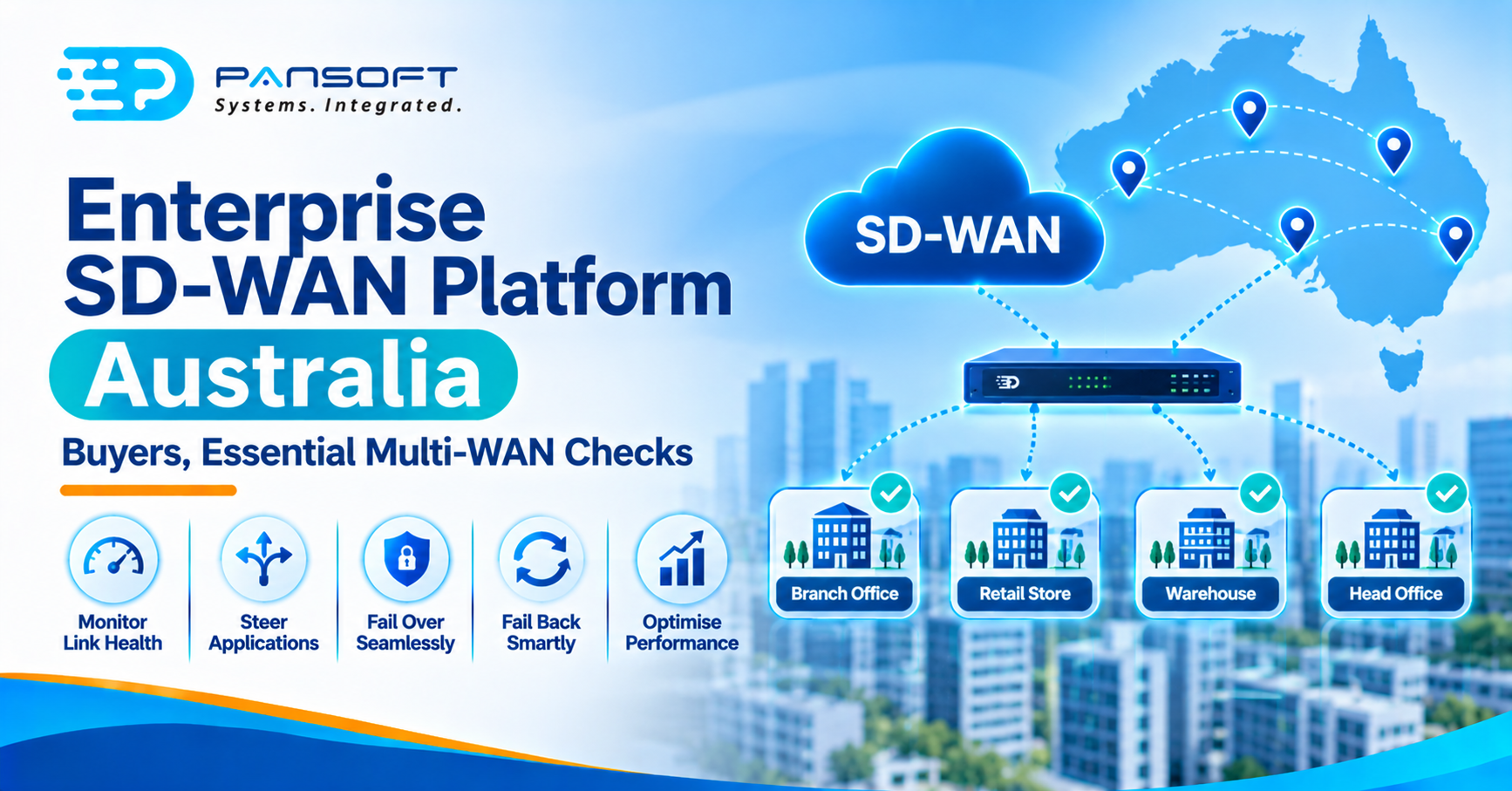
Enterprise SD-WAN Platform Australia Buyers, Essential Multi-WAN Checks
Enterprise SD-WAN Platform Australia Buyers, Essential Multi-WAN Checks By the Pansoft Technologies team | Published 6 November 2026 | Last reviewed: November 2026 An enterprise…
Read More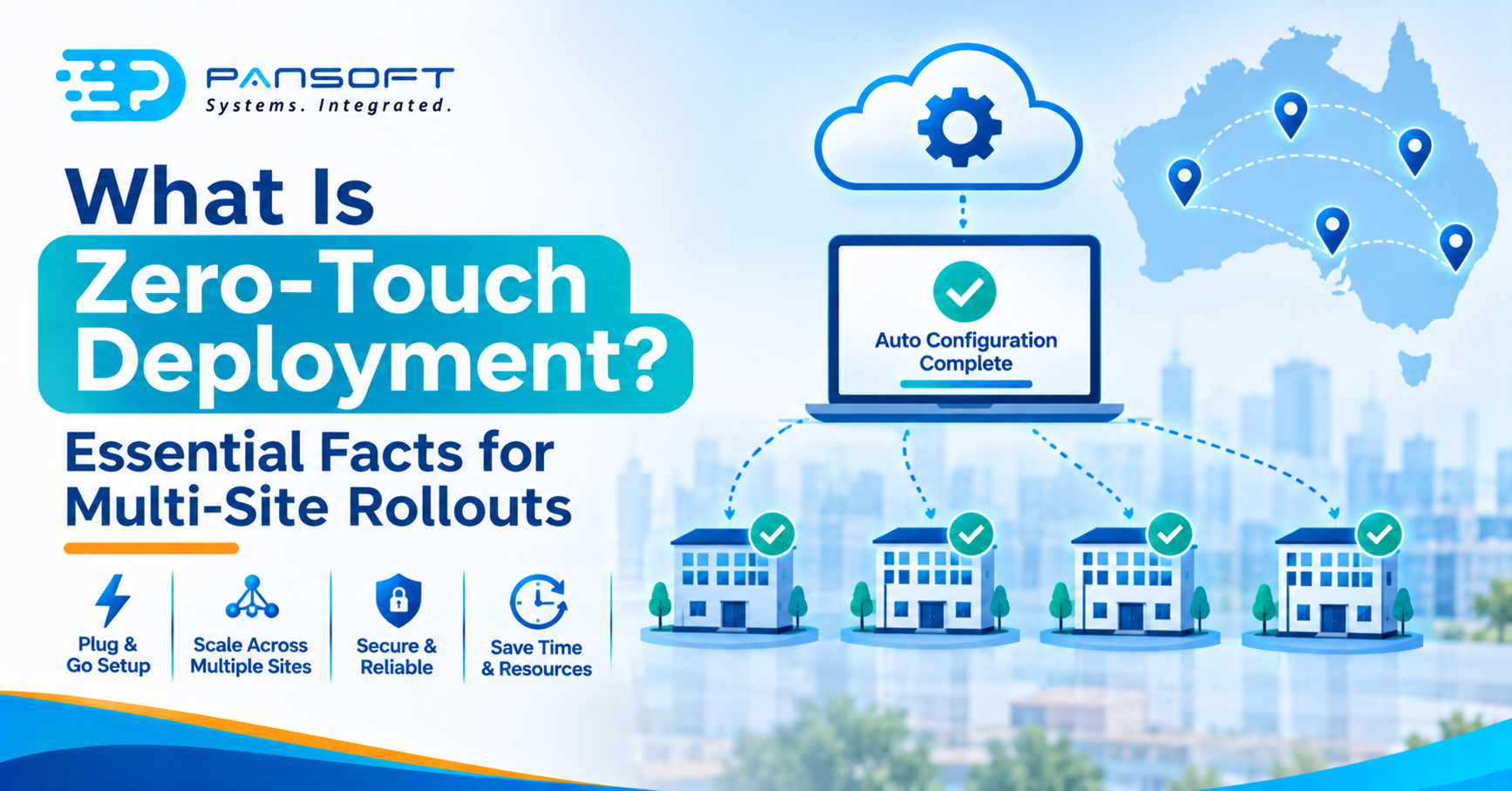
What Is Zero-Touch Deployment? Essential Facts for Multi-Site Rollouts
What Is Zero-Touch Deployment? Essential Facts for Multi-Site Rollouts By the Pansoft Technologies team | Published 6 November 2026 | Last reviewed: November 2026 Zero-touch…
Read More