
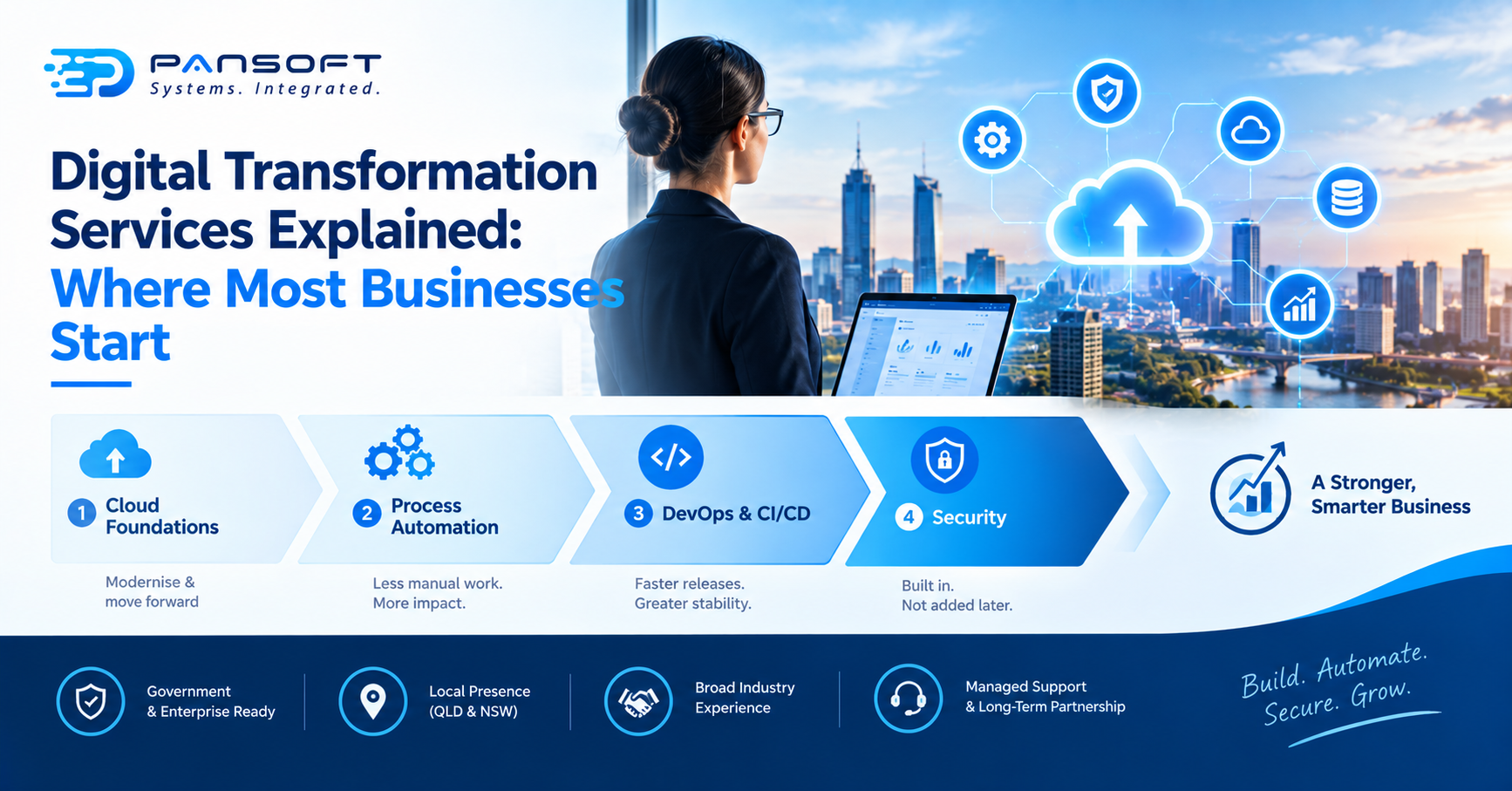
Digital Transformation Services Explained: Where Most Businesses Start
Digital transformation services Australia businesses actually start with usually aren’t the flashy stuff. Most engagements begin with three unglamorous but foundational moves: getting core systems onto the cloud properly, automating the manual processes eating up staff time, and building the security foundation that makes everything else safe to build on. Everything past that point is refinement.
That’s a different answer to the one a lot of vendors give, and it’s worth understanding why, especially if you’re trying to work out where your own organisation should actually begin.
Why “Transformation” Usually Starts With Cleanup, Not Innovation
The term “digital transformation” gets used to describe almost anything technology-related, which makes it sound bigger and more abstract than what most businesses actually need first. In practice, the starting point is rarely a new AI initiative or a flashy customer-facing app. It’s fixing what’s already broken underneath.
That typically means moving workloads off ageing on-premise infrastructure, consolidating systems that have grown disconnected over time, and getting a clear, accurate picture of what’s actually running across the business. Skipping this step and jumping straight to advanced tooling is one of the more common reasons transformation projects stall, because you end up automating processes built on shaky foundations.
Business Process Automation Is Usually the First Real Win
Once the foundational cleanup is underway, the next stop for most organisations is business process automation ERP work. This is where the return on investment tends to show up fastest, because it’s targeting the manual, repetitive work that’s easiest to identify and easiest to measure once it’s gone.
Think invoice processing that used to take days now taking hours. Approval chains that used to sit in someone’s inbox for a week now routing automatically. Reporting that used to be manually compiled every month now generating itself. None of this is glamorous, but it’s the part of transformation that finance teams and operations managers notice immediately, and it’s usually what builds internal confidence to keep going.
DevOps and CI/CD: Where Technical Teams Start Feeling the Difference
For businesses with any kind of internal software development, whether that’s a customer portal, an internal tool, or a broader product, DevOps implementation and CI/CD work tends to be where technical teams feel the shift most directly. Instead of software releases being a stressful, manual, occasional event, changes get tested and deployed continuously, in smaller and safer increments.
This matters more than it might sound. A development team stuck on slow, manual release cycles isn’t just working inefficiently, they’re also carrying more risk with every release, because bigger, less frequent deployments tend to break more things. Getting this right early tends to pay off disproportionately as the business scales its technology footprint.
Security Has to Be Built In, Not Bolted On Afterwards
Here’s where a lot of transformation efforts go sideways: security gets treated as a separate project, tackled after the “real” transformation work is done. That’s backwards. Every new automated process, every cloud migration, every new integration point is also a new potential attack surface, which means strengthening cybersecurity needs to run in parallel with the rest of the work, not trail behind it.
This is also where the difference between a general technology vendor and a proper IT Company Gold Coast businesses can genuinely rely on becomes obvious. A provider treating security as an afterthought will eventually hand you a modernised environment with new gaps nobody accounted for. One that builds it in from the start won’t.
Why Local, Broad Experience Actually Matters Here
Digital transformation touches nearly every part of a business at once, cloud, security, automation, development practices, sometimes ERP and finance systems too. That breadth is exactly why the choice of partner matters more here than for a narrower project. A trusted enterprise IT partner with genuine depth across these areas, rather than a single specialty, tends to spot the dependencies between them that a narrower provider misses entirely.
This is also where regional presence starts to matter in a practical sense. A provider offering Brisbane IT consulting alongside Gold Coast-based delivery has usually been tested across a wider range of business sizes and industries than one working in a single, tightly local market, which tends to translate into fewer surprises during a transformation project.
Where Government and Enterprise Requirements Change the Picture
For organisations operating as an IT provider for government and enterprise, or working alongside one, the starting point shifts slightly. Compliance requirements, procurement processes, and data governance obligations mean the cleanup and security phases need to be more rigorous from day one, because there’s less room to fix gaps after the fact. This doesn’t change the sequence so much as it raises the bar at each stage.
What Ongoing Support Looks Like Once the Foundation Is in Place
Digital transformation isn’t really a project with a finish line, it’s closer to an operating model. Once the initial foundation work is done, most organisations shift into an ongoing relationship built around managed IT services Gold Coast businesses use to keep systems monitored, maintained, and improved over time, rather than letting things quietly drift back toward the state they started in.
A Few Questions Worth Asking Before You Start
Do we need to overhaul everything at once?
No. Most successful transformations are staged, starting with infrastructure and security, then moving into automation and development practices. Trying to do everything simultaneously is one of the more common ways projects lose momentum.
How long does a typical transformation take?
This varies significantly depending on scope and starting point. [Specific timelines should be confirmed directly with the team based on your current environment, rather than assumed from a general figure.]
Is cloud migration always the first step?
Usually, though not always. Some organisations need process automation or security remediation first, depending on where the biggest risks or inefficiencies currently sit.
Where to Go From Here
If you’re trying to work out where your own organisation should actually start, that’s a conversation worth having before committing to a specific plan. Get in touch with the Pansoft team for a straightforward chat, no pressure, just a clear look at what makes sense for where you’re at.

Related Posts
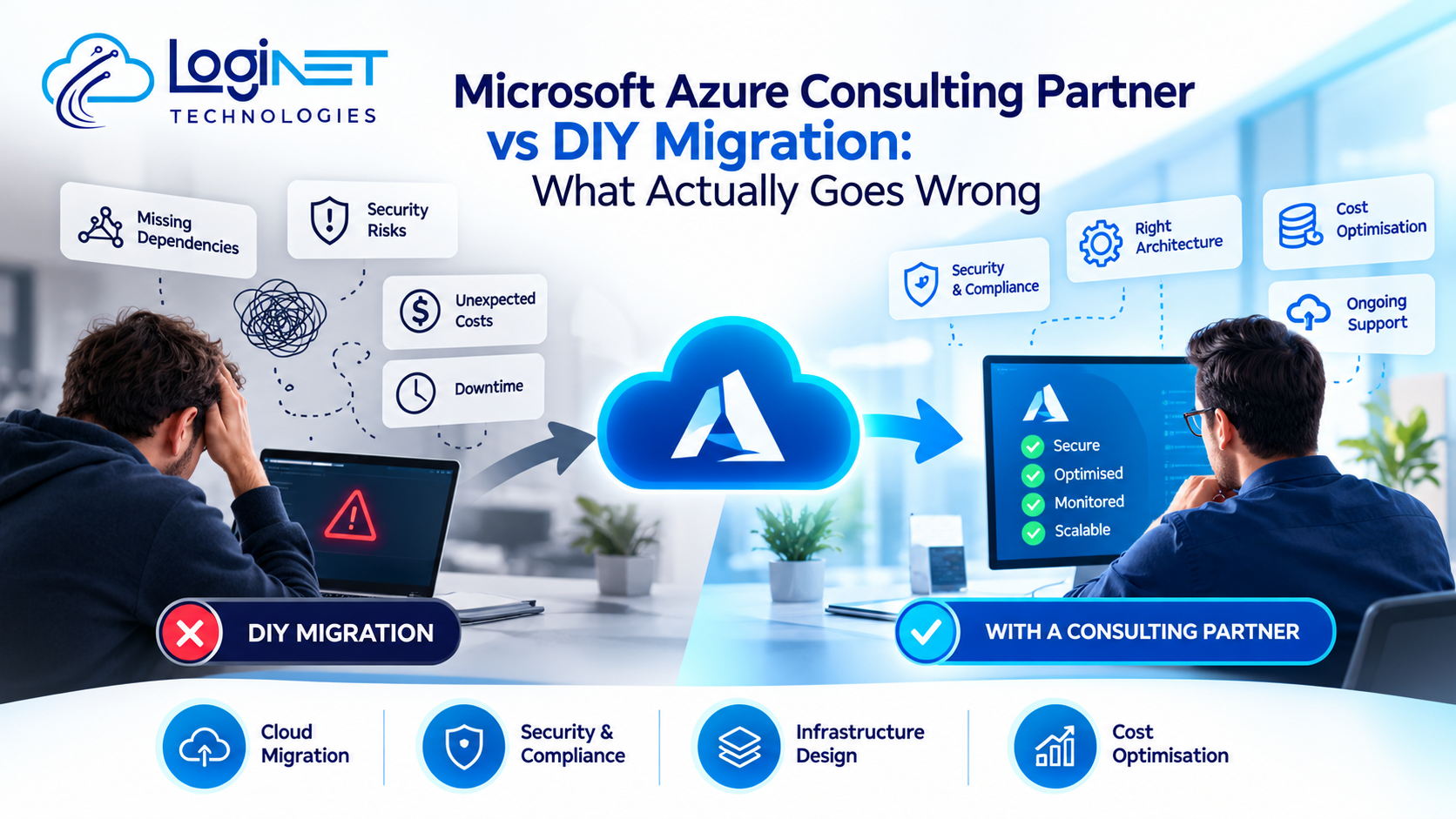
Microsoft Azure Consulting Partner vs DIY Migration: What Actually Goes Wrong
Microsoft Azure Consulting Partner vs DIY Migration: What Actually Goes Wrong Here’s the plain version: a DIY migration tends to run fine right up until…
Read More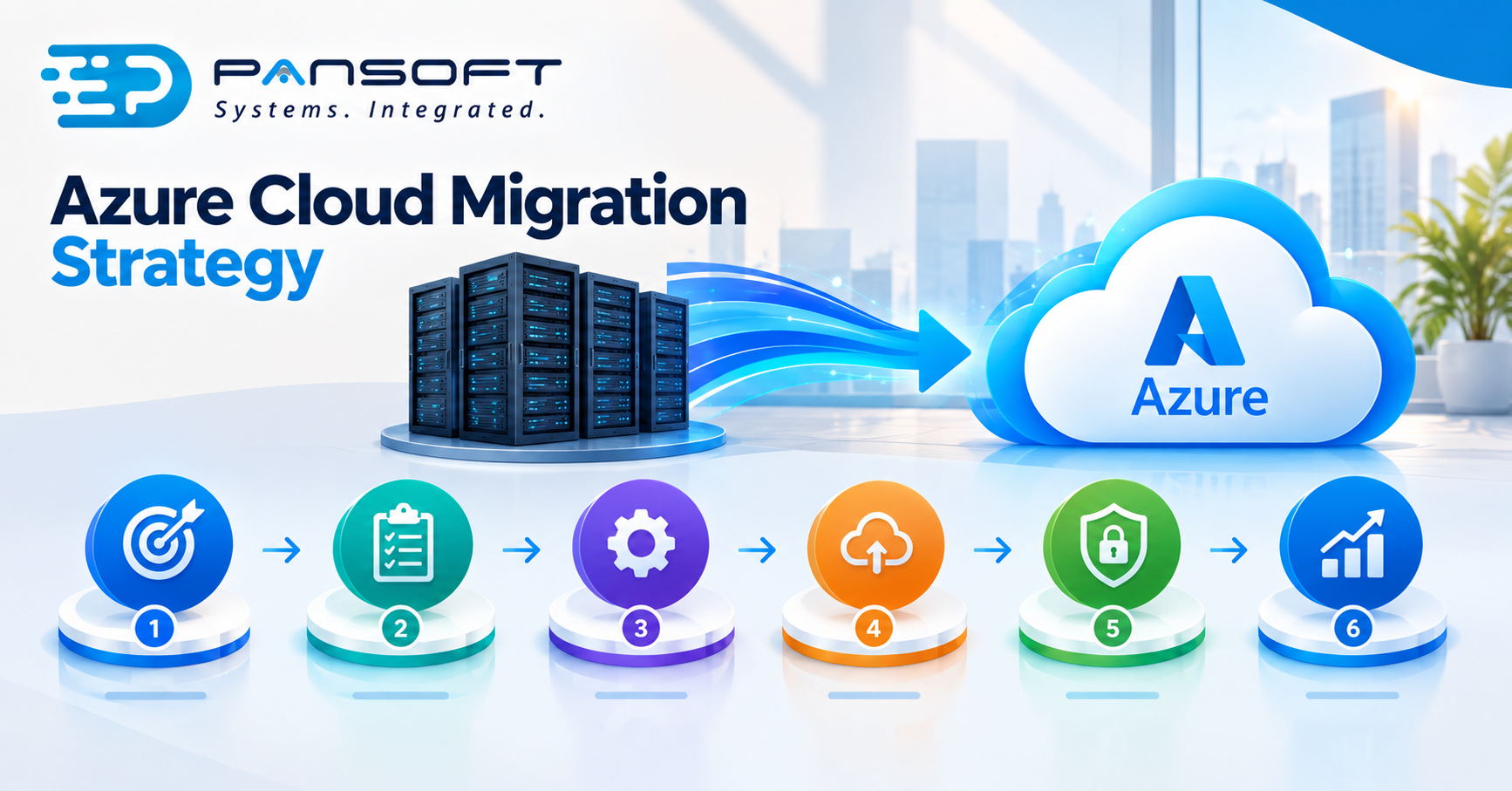
What Is a Common Azure Customer Cloud Migration Strategy?
What Is a Common Azure Customer Cloud Migration Strategy? Most Azure customers end up following some version of Microsoft’s own Cloud Adoption Framework, even if…
Read More